
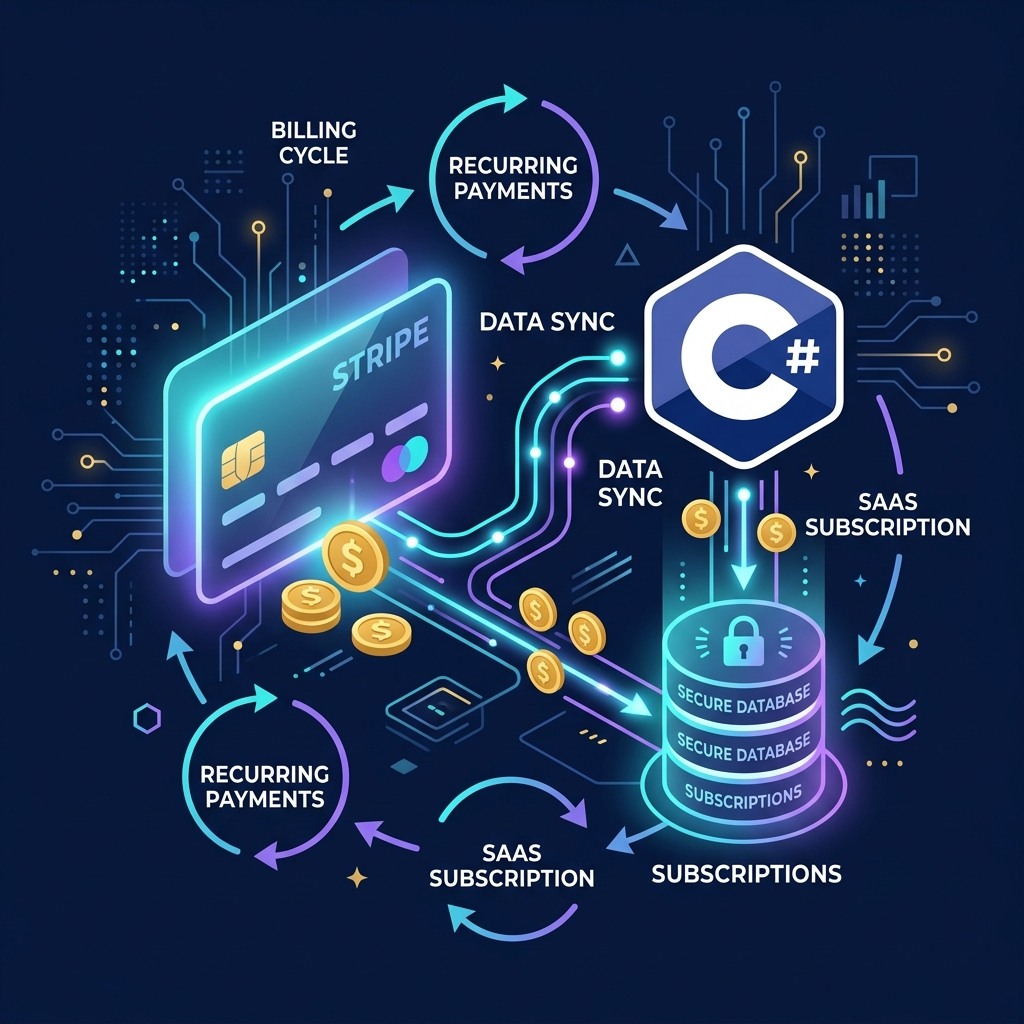
For modern Software-as-a-Service (SaaS) startups and enterprise platforms, recurring subscription billing is the operational engine of the business. However, building a scalable billing system is one of the most complex challenges in software engineering. Handling upgrade/downgrade pro-rations, managing credit card declines, initiating grace periods, and tracking multi-tier pricing plans requires a robust, transaction-safe architecture.
Rather than building a billing engine from scratch, modern software teams utilize **Stripe Billing**. While Stripe simplifies card vaulting and billing schedules, integrating Stripe with a proprietary C#/.NET database requires meticulous planning. The core of a successful integration relies on establishing a secure, real-time pipeline that syncs Stripe’s cloud events with your local database to grant or revoke user access instantly.
What is Stripe Dunning Management?
Dunning is the process of methodically communicating with customers to collect unpaid subscription fees. If a customer's credit card expires, Stripe will automatically retry the charge according to your schedule and fire webhook events. Your C# backend must listen to these events, notify the user, and temporarily suspend access if all collection retries fail.
1. Example SaaS Subscription Plan Structure
When designing a SaaS application, your database must map to Stripe's Price IDs. Below is a mock configuration showing how pricing tiers are presented to users and managed via Stripe's hosted Checkout:
Perfect for single-operators and small startup teams looking for basic API access.
- ✓ 1,000 Monthly Active Users
- ✓ Basic Reporting Dashboard
- ✓ Email Support
Our most popular tier, engineered for scaling business operations and API integrations.
- ✓ 10,000 Monthly Active Users
- ✓ Advanced Metrics & Webhooks
- ✓ Priority 24/7 Developer Support
- ✓ Custom Field Mappings
Tailored specifically for large organizations requiring dedicated database clusters.
- ✓ Unlimited API Traffic
- ✓ SLA & Uptime Guarantees
- ✓ Dedicated Solutions Engineer
2. Mapping Stripe Webhook Events to System Actions
To maintain accurate records, your sync middleware must capture Stripe's cloud signals. Below is the list of crucial Stripe events presented as color-coded action panels:
customer.subscription.created
Fires when a customer successfully checks out. The C# sync engine captures this event, registers the new subscription in the local database, and updates the tenant's license status.
invoice.payment_succeeded
Fires on every successful monthly charge. Your C# gateway creates a payment record in the ledger database, extends the subscription validity dates, and resets monthly API limits.
invoice.payment_failed
Fires when a transaction fails (e.g. expired credit card). The system flags the account as "past_due," initiates dunning workflows, and sends automated warning emails to the user.
customer.subscription.deleted
Fires when a subscription is manually canceled or all payment retry attempts fail. The C# backend immediately restricts database access and updates the tenant status to inactive.
3. Operational Best Practices for Stripe Integrations
Beyond webhook handling, engineering teams must build safeguards to guarantee payment transaction reliability:
- Idempotent Event Loggers: Stripe sometimes sends the same webhook event twice. To prevent database duplication or double invoicing, your backend must log processed Event IDs and verify them before running database scripts.
- Grace Period Allocations: Do not block customer accounts the exact second a card payment fails. Give users a 3-to-7 day grace period where the app shows an update card notification while keeping their features active.
- Stripe Checkout over Custom Forms: Always use hosted Stripe Checkout Sessions instead of hosting custom credit card input fields. This keeps your server completely out of PCI-DSS compliance scope.
Architect's Tip: Verify Webhook Signatures Cryptographically
Never process a Stripe webhook payload without verification. An attacker can discover your endpoint and send fake paid-invoice payloads to obtain free software access. Always configure your API gateway to verify the signature header using your shared Stripe webhook secret key.
Partner with Krista Technology for Secure SaaS Integrations
Integrating third-party payment platforms with custom .NET business architectures requires deep API experience, transaction safety controls, and proper cloud setups. At Krista Technology, we are a Microsoft Solutions Partner helping companies automate billing, sync recurring sales pipelines, and orchestrate custom portals connected directly to Stripe.
If you want to build a custom sync portal, automate your bookkeeping pipelines, or hire a team of dedicated integration developers, contact our dedicated .NET Integration Engineers today for a technical assessment and a custom integration estimate.