
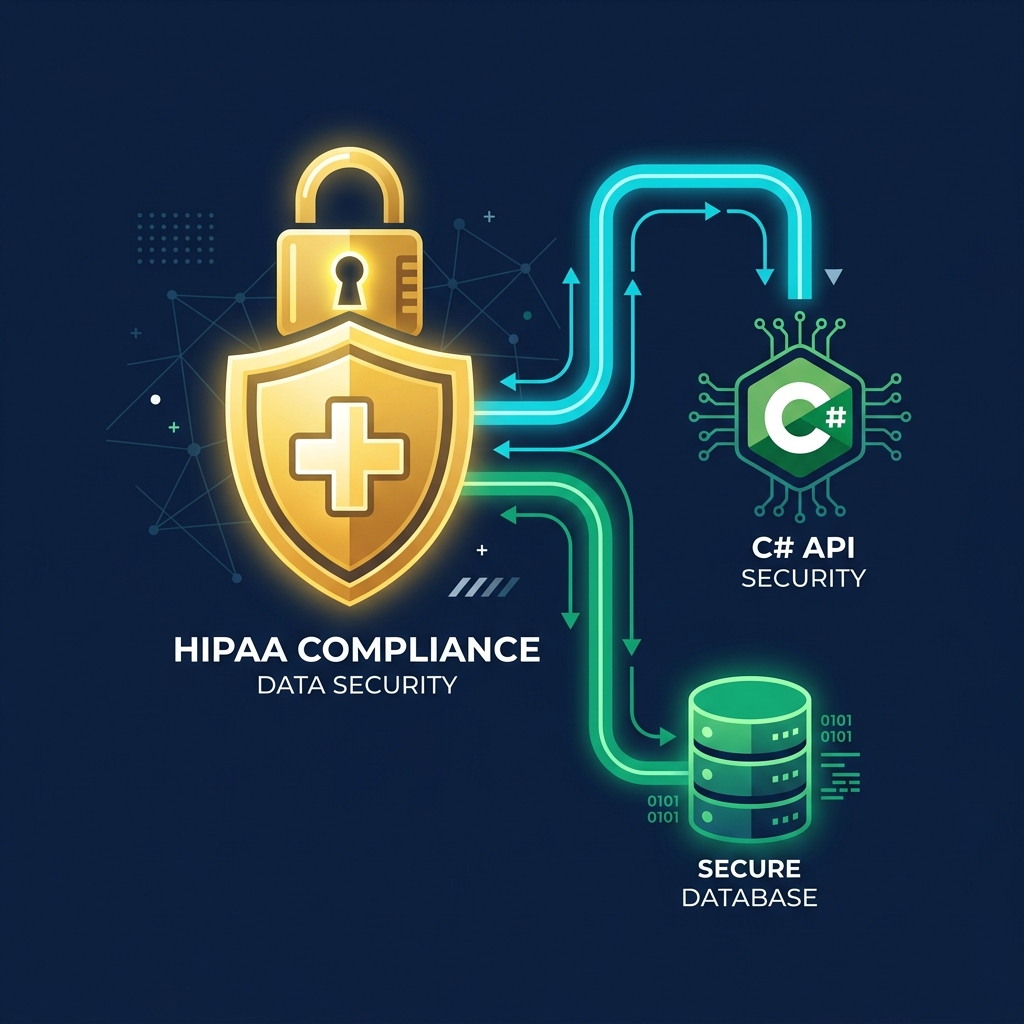
For digital health startups and enterprise healthcare organizations, security is not just a feature—it is a legal mandate. In the United States, any software that handles Protected Health Information (PHI) must strictly comply with the **Health Insurance Portability and Accountability Act (HIPAA)**. Failing to protect patient data can result in massive financial penalties, legal liabilities, and irreparable damage to your brand reputation.
Building a HIPAA-compliant healthcare application requires deep architecture-level planning. Because the backend API acts as the gateway to your patient database, securing your Web API is the most critical phase. Using C# and Microsoft Azure, software engineering teams can build highly resilient, compliant architectures by implementing technical safeguards like encryption at rest, encryption in transit, claims-based access controls, and detailed audit logging.
What qualifies as Protected Health Information (PHI)?
Under HIPAA, PHI includes any demographic information, medical histories, test results, insurance details, or social security numbers that can link a patient's identity to their healthcare records. If your API handles even one of these fields, it must comply with HIPAA regulations.
1. HIPAA Secure Data Flow Architecture
A compliant system must ensure that patient data is encrypted at every stage—during transmission from the browser, processing in memory, and storage in the database. Below is the standard secure ingestion layout:
Web/Mobile App
TLS 1.3 Encryption & MFA Authentication
ASP.NET Core Web API
JWT Token validation, Role-based authorization & Audit Logger Interceptors
Azure SQL DB
Transparent Data Encryption (TDE) & Column Encryption
2. The 4 Technical Safeguards of HIPAA
The HIPAA Security Rule defines four distinct areas of technical compliance that software development teams must implement to protect patient information. Below is our structural breakdown of these safeguards:
Access Control (164.312.a)
Requires assigning unique identifiers (credentials) to every user. Systems must enforce Multi-Factor Authentication (MFA), automatic session lockouts during inactivity, and role-based access permissions.
Audit Controls (164.312.b)
Mandates recording every database action involving patient data. Developers must build automatic transaction loggers to track who viewed, created, modified, or deleted records, along with exact timestamps.
Data Integrity (164.312.c)
Ensures that Protected Health Information (PHI) cannot be altered, corrupted, or deleted by unauthorized means. Implemented via row-level checksum hashes and column-level database field encryption (AES-256).
Transmission Security (164.312.e)
Protects PHI as it travels across networks (e.g. from mobile app to cloud API). The system must enforce modern encryption protocols (TLS 1.3) and restrict older, insecure protocols.
3. Technical HIPAA Safeguards Checklist
The table below lists the primary technical requirements defined by HIPAA and how they map to our software engineering standards:
| HIPAA Clause | Technical Safeguard Requirement | Software Implementation Strategy |
|---|---|---|
| Access Control (164.312.a) | Assign unique user IDs and require secure authentication. | Secure Identity Management with Multi-Factor Authentication (MFA) and secure JWT access tokens. |
| Audit Controls (164.312.b) | Record and examine activity in systems containing PHI. | Automatic database interceptors logging all database read, write, and delete events. |
| Integrity (164.312.c) | Protect PHI from unauthorized alteration or destruction. | Row-level hash checks and column encryption via AES-256 converters in the database. |
| Transmission Security (164.312.e) | Guard against unauthorized access to PHI in transit. | Strict enforcement of TLS 1.3 and HTTPS connections across all API gateway routes in cloud servers. |
Architect's Tip: Mask Patient Identifiers in Error Logs
Even if your database is encrypted, your system application logs can accidentally leak PHI if they record raw exception details containing SQL query values or HTTP body contents. Always configure log masking to filter out variables containing names, emails, and medical codes before writing logs to disk.
Partner with Krista Technology for Secure Healthcare Software
Building HIPAA-compliant systems, FDA-validated medical software, and secure Web API architectures requires senior-level engineering oversight. At Krista Technology, we are a Microsoft Solutions Partner with years of experience building secure, HIPAA-compliant digital health apps, custom EMR integrations, and cloud databases under strict security protocols.
If you want to validate your current healthcare software compliance, design a new secure medical app, or hire a pre-vetted team of compliance-ready backend developers, contact our dedicated .NET Security Engineers today for a free technical consultation and security architecture review.