
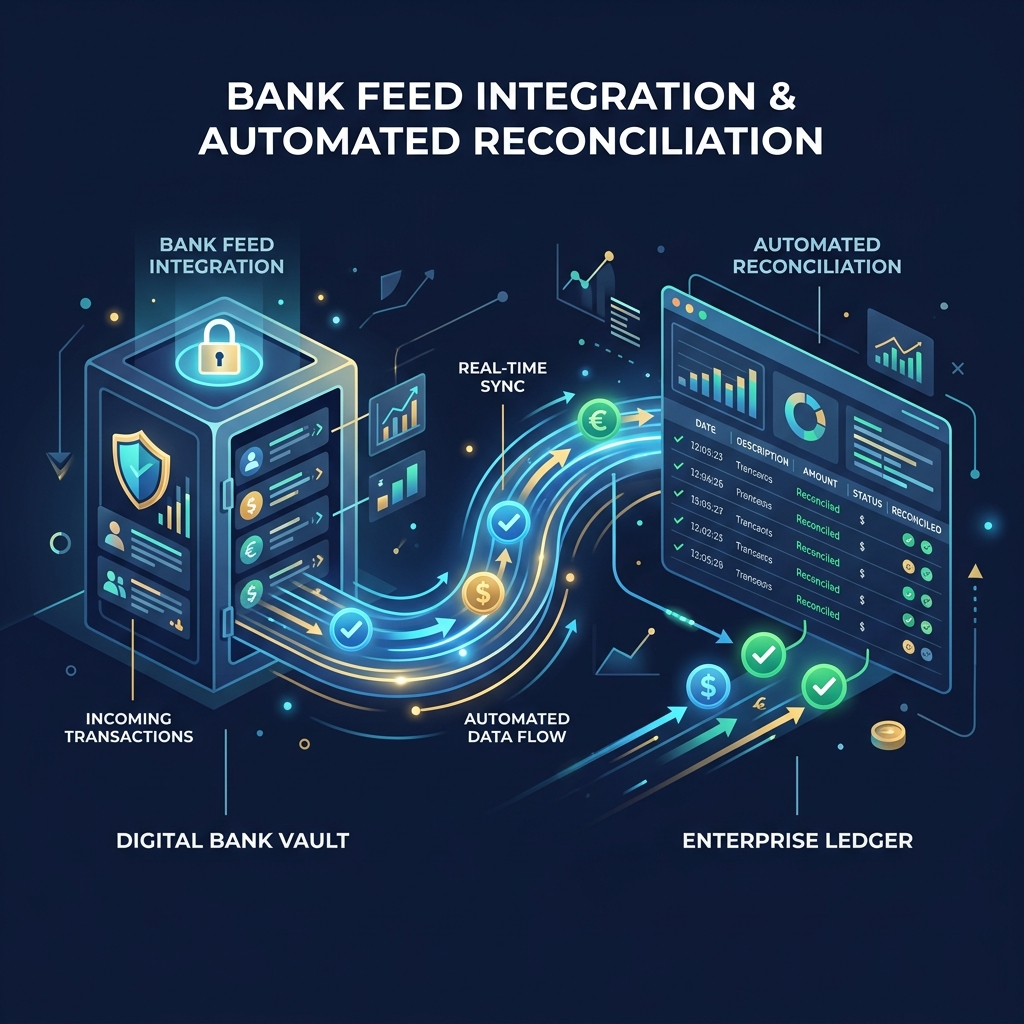
For SaaS platforms, ERP systems, and modern Fintech portals, managing financial transactions is a critical capability. Historically, businesses relied on manual bookkeeping processes—downloading monthly CSV bank statements and having accounting teams match each transaction to customer invoices. This manual workflow is slow, expensive, and prone to human errors that can result in incorrect tax audits and lost revenue.
The modern solution is establishing direct, real-time bank feeds. By integrating API networks like Plaid or Yodlee with a high-performance C# .NET Core backend, your software can ingest bank transactions automatically, reconcile invoices in milliseconds, and update the general ledger without human intervention. Building an automated transaction reconciliation engine secures your financial pipeline, ensures tax compliance, and offers users a seamless financial dashboard.
The Power of Double-Entry Bookkeeping in C#
An automated bank feed is only as good as the database architecture behind it. A robust financial engine must enforce strict double-entry bookkeeping rules—every credit entry must have a corresponding debit entry, and the overall balance must always equal zero. By utilizing C# strong typing and SQL Server transactional locks, you can ensure that ledger writes are atomic, preventing database mismatch errors even when processing thousands of concurrent webhook transaction updates.
1. The Bank Feed API Integration Dashboard
Automating transaction reconciliation involves managing secure banking connections and structured data pipelines. The grid below details the four pillars of a modern bank feed architecture:
Consent & Banking OAuth
Establish secure connections using bank-level OAuth protocols. Users log in directly through their institution's secure portal, granting your SaaS platform read-only access to their transaction history without exposing credentials.
Multi-Bank Schema Mapping
Different financial institutions format transaction details differently. The C# integration layer normalizes diverse vendor JSON payloads into a unified schema, mapping dates, amounts, and descriptions consistently.
Atomic Ledger Writing
Every verified transaction must write debits and credits atomically. Using SQL database transactions, the system ensures that either both entries succeed or both roll back, preserving absolute database integrity.
AI-Driven Reconciliation
The matching engine analyzes transaction values, timestamps, and merchant descriptions against open invoices, automatically executing matches and flagging exceptions for manual accounting review.
2. The Automated Reconciliation Lifecycle
The process of capturing, verifying, and reconciling a banking transaction follows a secure, event-driven timeline:
Consent handshake
The user connects their bank account via Plaid Link, issuing an encrypted access token to your backend service.
Webhook Trigger
When a transaction occurs, the bank API dispatches an encrypted POST webhook notifying your C# listener API.
Parsing & Deduplication
The C# API validates the signature, normalizes the payload parameters, and runs deduplication filters based on transaction UUIDs.
Matching & Reconcile
The matching engine links the transaction to open invoices, posts debit/credit entries, and marks the account reconciled.
3. Manual CSV Uploads vs. Automated Bank Feed Integration
The comparison matrix below highlights the operational advantages of moving from manual document imports to an automated real-time API pipeline:
| Business Metric | Automated Bank Feed API | Manual CSV Statement Uploads |
|---|---|---|
| Processing Speed | Real-time (Reconciled within seconds of transaction) | Delayed (Completed weekly or monthly). |
| Human Error Rate | 0% (Validated by database type constraints) | High (Typo entries, duplicate imports, skipped items). |
| Audit Trail Compliance | 100% compliant (Read-only, tamper-proof logs) | Low (Files can be modified before uploading). |
| Operational Cost | Low (API cost is fraction of accounting hourly rate) | High (Requires full-time bookkeeping hours). |
Fintech Tip: Implement VAPID Signature Verification on Webhooks
Because your webhook listener API writes directly to your general ledger database, it is a high-value target for hackers attempting to send fraudulent transaction payloads. To prevent this, never trust incoming webhook data blindly. Configure your C# backend to compute SHA-256 signatures using VAPID keys shared during banking setup, verifying that the payload originates from Plaid before executing any database write operations.
Partner with Krista Technology to Build Secure Fintech Platforms
Building double-entry ledger databases, establishing secure banking connections, validating webhooks, and rendering financial dashboards requires highly experienced software engineers. At Krista Technology, we specialize in Next.js web portals, SQL Server transactional isolation, secure API integrations, and C# .NET Core backend engineering.
If you want to build a Fintech SaaS application, integrate automated bank feeds, or hire a team of dedicated Next.js & .NET developers, visit our dedicated developer hiring page today to request a CV shortlist and get a free technical estimation for your SaaS roadmap.